
Animal Directory Featured species in the planned Botanical Garden habitat
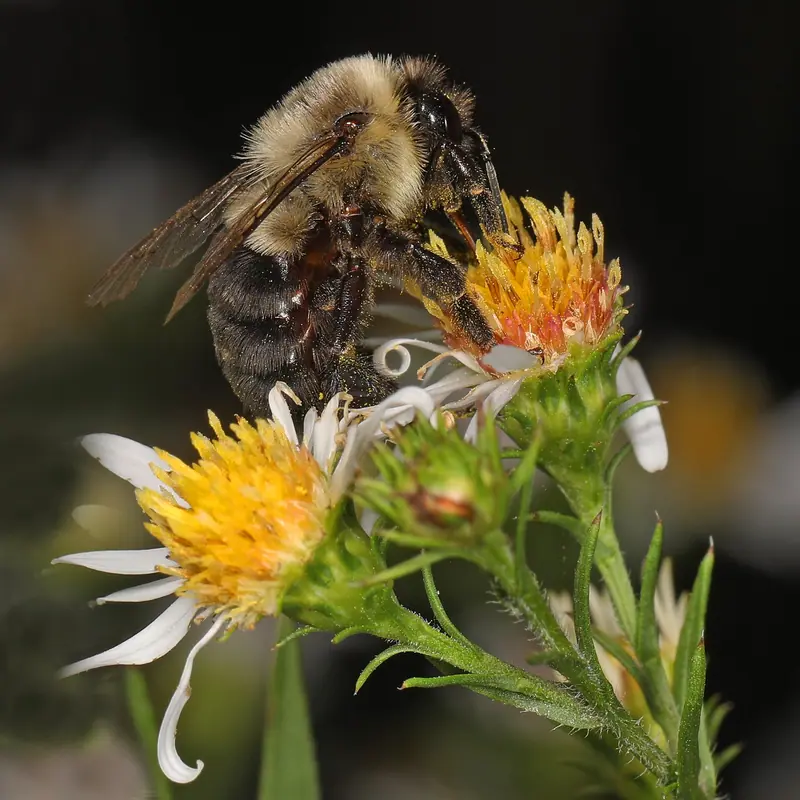
Photo: Judy Gallagher CC BY 2.0 Wikimedia Commons
Common Eastern Bumblebee
Bombus impatiens
Young Explorer Notes
Three quick things to know about the Common Eastern Bumblebee.
- Superpower
Performs "buzz pollination" — vibrates flight muscles at roughly 400 Hz against a flower to shake loose pollen that h…
- Home
Flower paths, greenhouses, and quiet garden rooms.
- How to help
Doing great in the wild!
Scientists say this species is safe for now. We still learn about them to keep it that way.
Fun facts for everyone
- Performs "buzz pollination" — vibrates flight muscles at roughly 400 Hz against a flower to shake loose pollen that honey bees cannot extract. Tomatoes, blueberries, and eggplants depend on it.
- Active in cool, wet, and overcast conditions when honey bees stay in the hive — bumblebees warm their flight muscles by shivering, so they can fly at near-freezing temperatures.
- One of only a handful of native North American bumblebee species whose populations are still expanding while ~25% of related Bombus species decline sharply.
- Lives in small annual colonies of 50-500 workers founded each spring by a single overwintered queen — by contrast, a honey bee colony persists for years.
- **Garden visitor**, not a resident — Botanical Garden's wildflower meadows and tubular bloom plantings are designed specifically to support bumblebees as part of a healthy local pollinator network.
From the master plan
The Common Eastern Bumblebee is the second wild pollinator regularly featured along the Botanical Garden’s meadow walk. Its larger size, lower-pitched buzz, and willingness to forage in marginal weather make it visible to guests long after honey bees have retreated to the hive — a deliberate part of the zone’s “always something blooming, always something visiting” planting strategy.
IUCN status sourced from the Common Eastern Bumblebee assessment (Hatfield et al., 2014) on the IUCN Red List —
Bombus impatienslisted as Least Concern, one of the few large-bodied North American Bombus species without a worrying decline trend.
Find them in