
Animal Directory Featured species in the planned African Savannah habitat
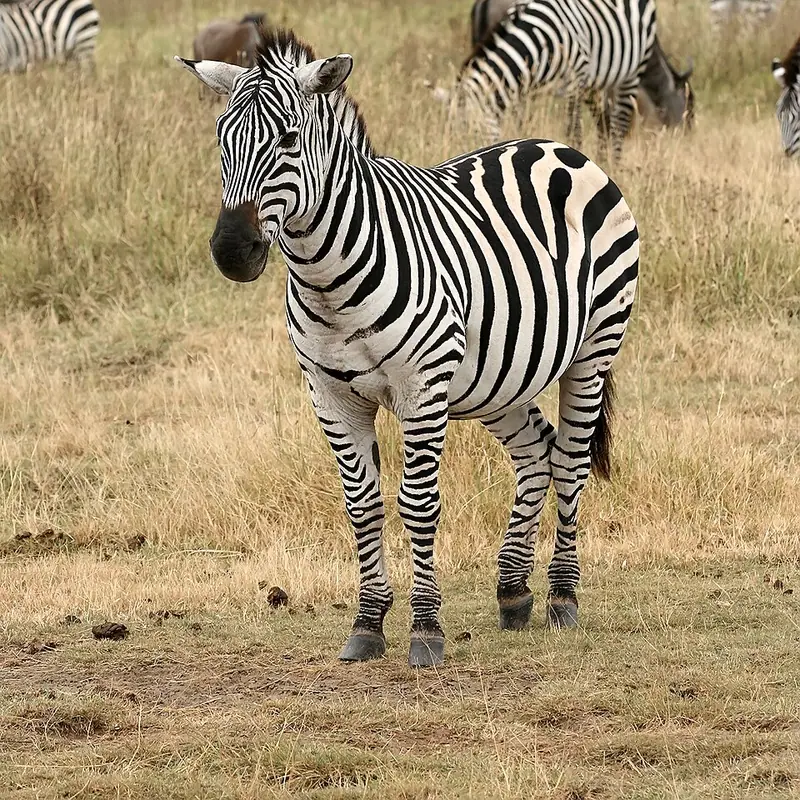
Photo: Muhammad Mahdi Karim GFDL 1.2 Wikimedia Commons
Plains Zebra
Equus quagga
Young Explorer Notes
Three quick things to know about the Plains Zebra.
- Superpower
No two zebras share the same stripe pattern — the markings are as individual as fingerprints and let foals re-find th…
- Home
Wide golden grasslands with acacia trees and open sky.
- How to help
Needs a little extra care
They are mostly okay today, but we watch them closely so they stay healthy.
Fun facts for everyone
- No two zebras share the same stripe pattern — the markings are as individual as fingerprints and let foals re-find their mother in a herd of hundreds.
- Recent research supports the theory that stripes deter biting flies (tabanids and tsetse) by breaking up the visual landing target — a sharper effect than camouflage from predators.
- Plains Zebra are the most numerous of the three zebra species and the engine of the Serengeti–Mara migration, walking up to 500 km a year between wet- and dry-season grazing.
- They have an unusually deep digestive system that handles tough, mature grass — leaving the finer regrowth for wildebeest and gazelle that follow them, a textbook example of grazing succession.
- The IUCN reassessed Plains Zebra as Near Threatened in 2016 after a roughly 25% population decline driven by habitat loss and bushmeat hunting.
From the master plan
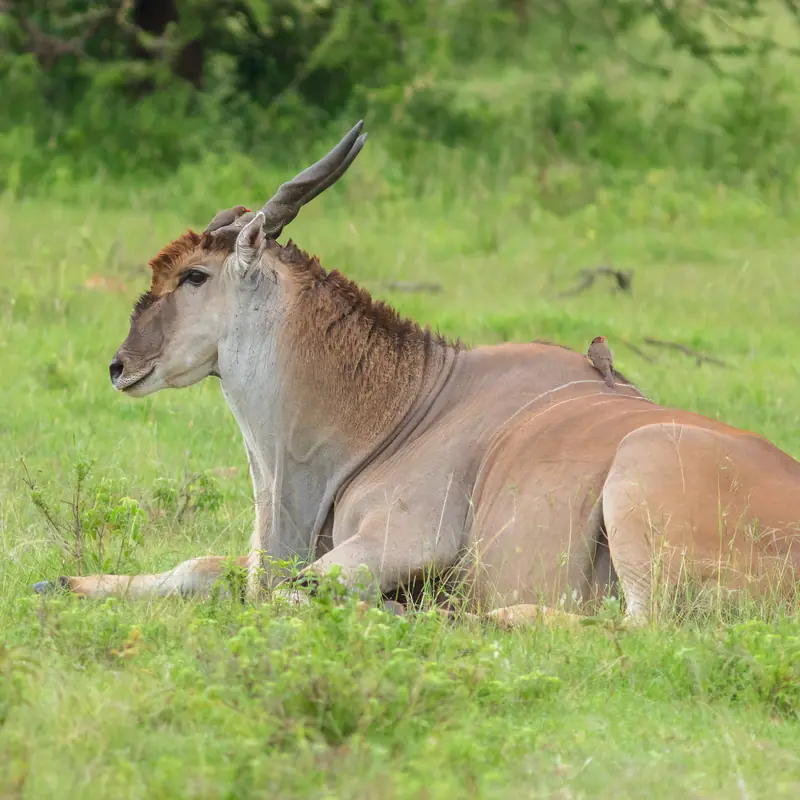
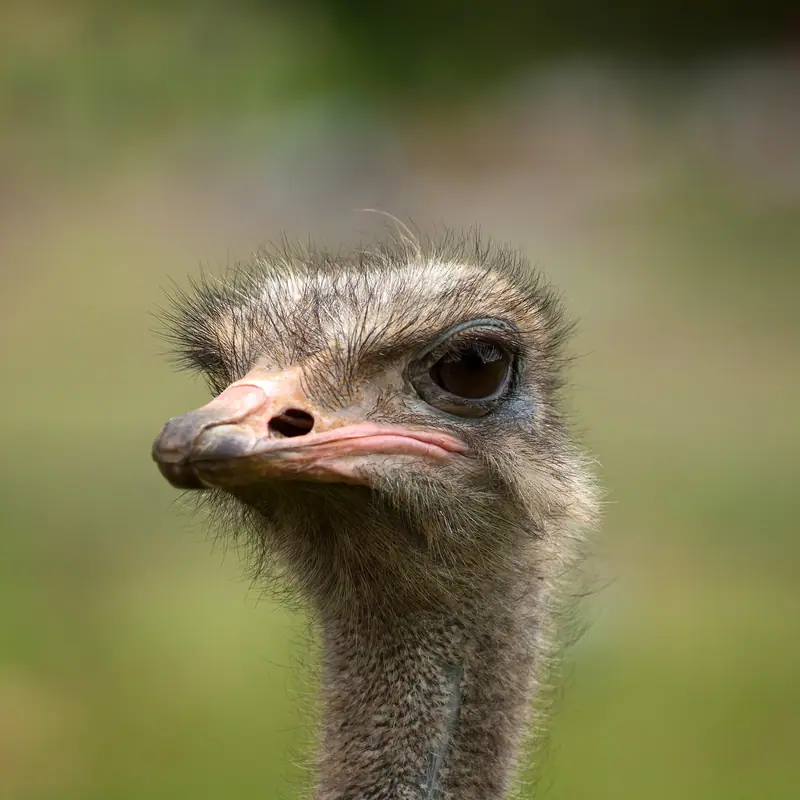
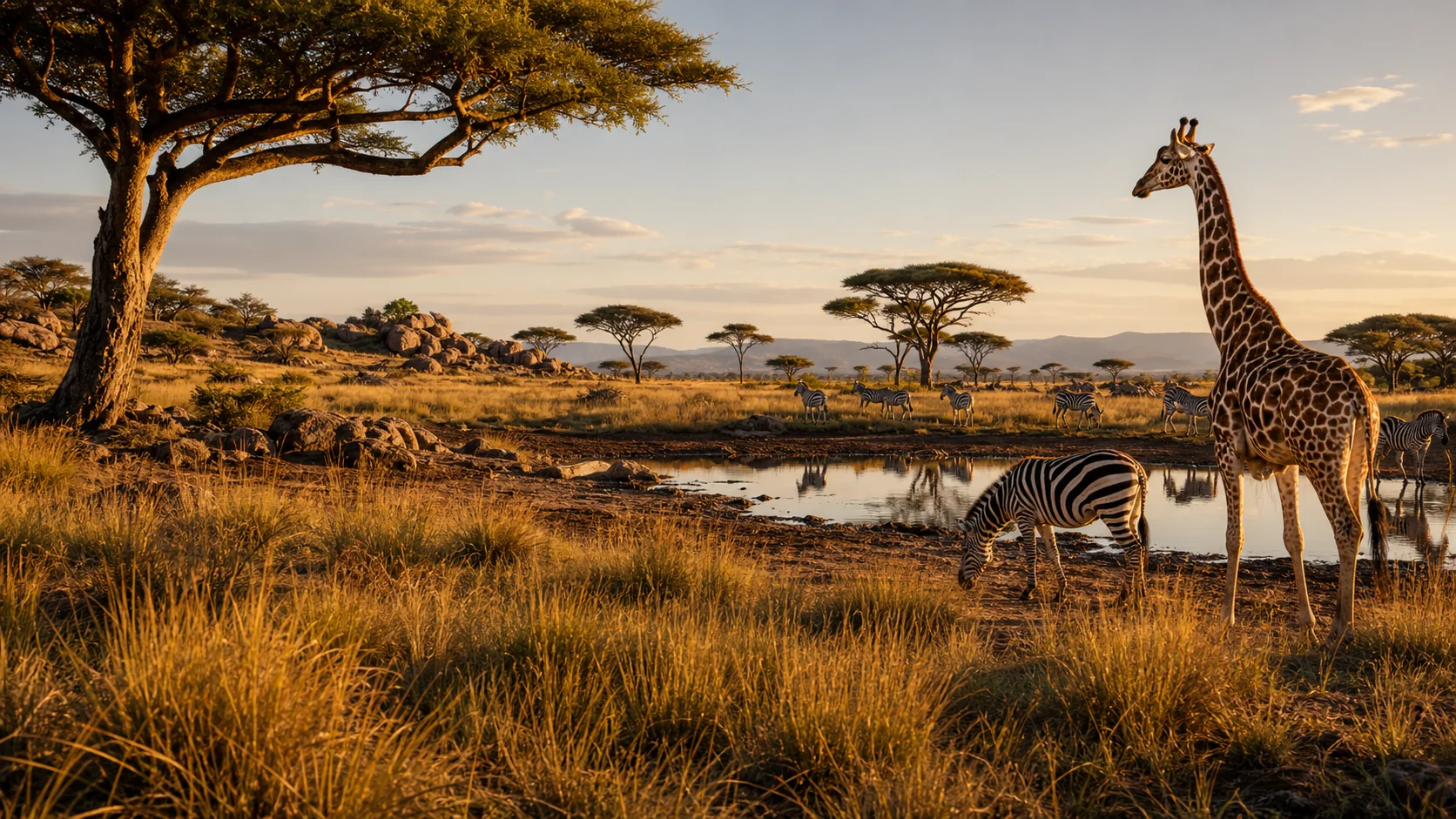
The Plains Zebra share the African Savannah’s central watering hole with antelope and ostrich, staged at eye level from the elevated overlook. The herd is sized to read clearly from a distance — striped flanks against tan grass are one of the zone’s signature mid-day photo moments.
IUCN status sourced from the Plains Zebra (Equus quagga) assessment (King & Moehlman, 2016) on the IUCN Red List — listed as Near Threatened with a decreasing population trend.
Find them in
African Savannah
Open grasslands with iconic wildlife and elevated viewing
Visit African Savannah