
Animal Directory Featured species in the planned Polar Ocean & Arctic Bay habitat
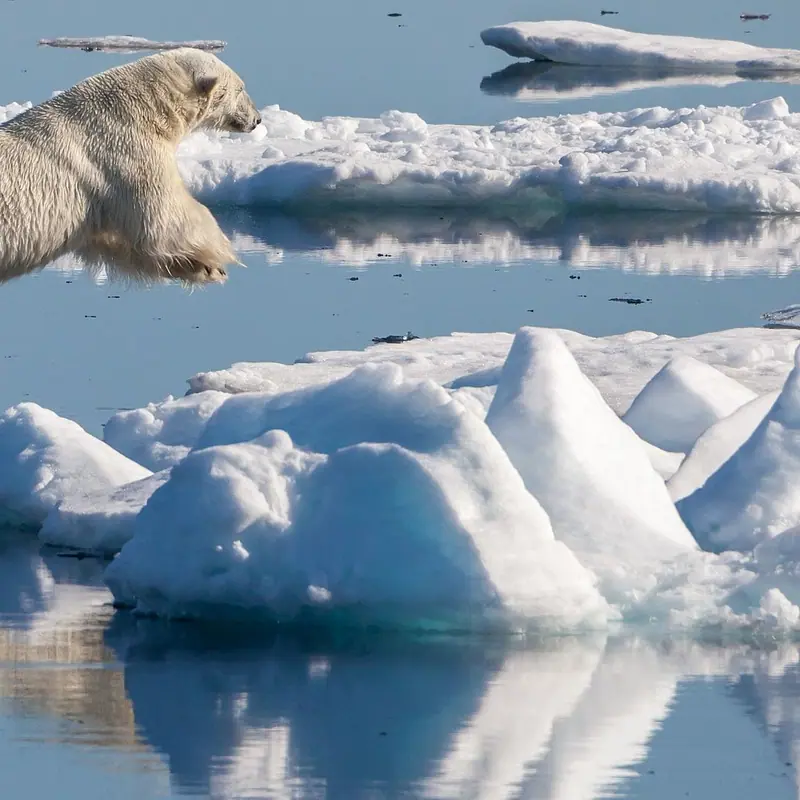
Photo: Andreas Weith CC BY-SA 4.0 Wikimedia Commons
Polar Bear
Ursus maritimus
Young Explorer Notes
Three quick things to know about the Polar Bear.
- Superpower
Classified as a marine mammal — spends most of its life on sea ice and is built to swim continuously for days at a time.
- Home
Chilly pools and snowy shores for polar animals.
- How to help
Friends who need our help
Vulnerable means they could disappear if we do not protect their homes.
Fun facts for everyone
- Classified as a marine mammal — spends most of its life on sea ice and is built to swim continuously for days at a time.
- Fur is not white but transparent, hollow tubes that scatter light; the skin underneath is jet black to absorb sun warmth.
- Can smell a seal through a metre of solid ice from up to a kilometre away.
- Recorded swims include single-leg crossings of more than 600 km of open ocean by females tracking shifting sea ice.
- IUCN lists the species as Vulnerable; sea-ice loss is projected to reduce the global population by more than 30% within the next three generations.
From the master plan
The Polar Bear is the planned Polar Ocean & Arctic Bay’s apex resident — viewed from the underwater Ice Tunnel as it swims, then again from the upper Polar Bear Ridge as it patrols the rocky shoreline. The dual-perspective exhibit is built around the truth that the polar bear is, biologically, half seal-hunter and half ocean swimmer.
IUCN status sourced from the Polar Bear (Ursus maritimus) assessment (Wiig et al., 2015) on the IUCN Red List — listed as Vulnerable with a continuing population decline driven primarily by sea-ice loss.
Find them in
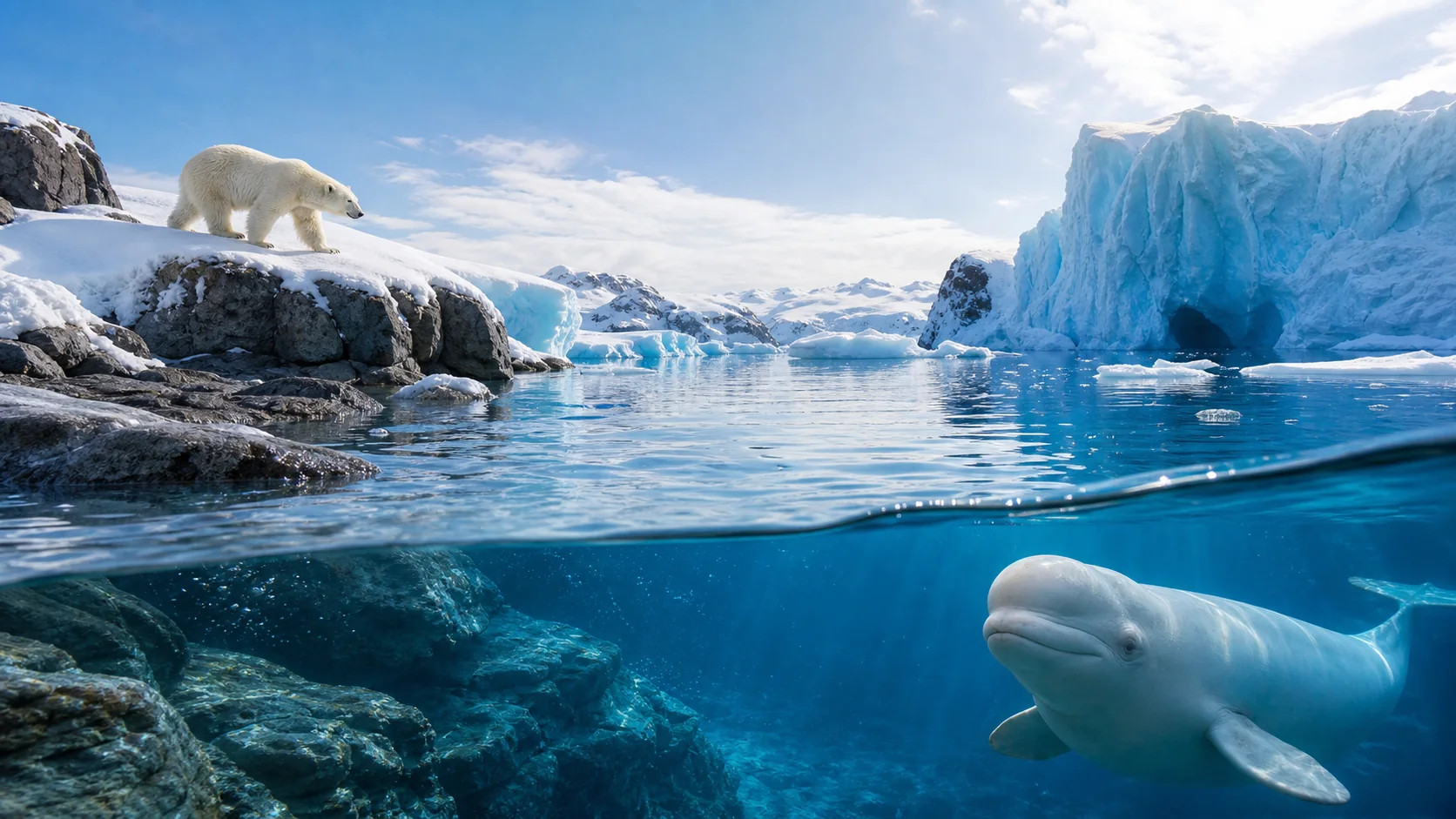
Polar Ocean & Arctic Bay
A world of ice, ocean and extraordinary adaptations
Visit Polar Ocean & Arctic Bay