
Animal Directory Featured species in the planned Big Cat Canyon habitat
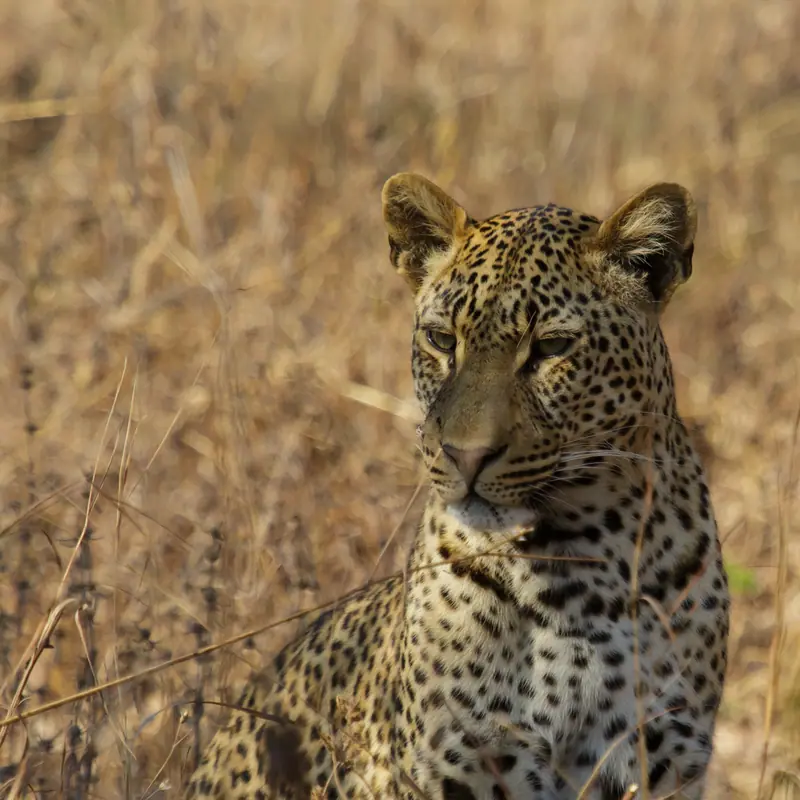
Photo: Thomas Fuhrmann CC BY-SA 4.0 Wikimedia Commons
African Leopard
Panthera pardus pardus
Young Explorer Notes
Three quick things to know about the African Leopard.
- Superpower
The most widely-distributed wild cat — African leopards still range across sub-Saharan Africa from rainforest to semi…
- Home
Rocky cliffs and shady trails where big cats prowl.
- How to help
Friends who need our help
Vulnerable means they could disappear if we do not protect their homes.
Fun facts for everyone
- The most widely-distributed wild cat — African leopards still range across sub-Saharan Africa from rainforest to semi-desert, making the species the most adaptable big cat alive.
- Pound-for-pound the strongest tree-climber of any big cat; a leopard can haul prey almost twice its own weight straight up a vertical trunk to cache it away from lions and hyenas.
- Their rosettes are smaller and denser than the jaguar's, and almost never enclose a central black spot — the easiest field mark to tell the two species apart.
- Leopards are nearly silent hunters; they vocalise with a low, rasping "sawing" call that sounds like wood being cut, used by territorial males at dawn and dusk.
- Despite the wide range, the IUCN tracks steep regional declines — North African and Arabian leopards are critically endangered, which is why African leopards anchor international ex-situ insurance populations.
From the master plan
The African Leopard shares the canyon’s mid-tier ledges with its Amur cousin, but is staged in a warmer, drier savannah-edge habitat with cached “prey” platforms in tall acacia analogues. Together the two leopards let guests compare the same cat’s adaptations to extreme cold versus extreme heat — the Big Cat Canyon’s most direct biology lesson.
IUCN status sourced from the Leopard (Panthera pardus) assessment (Stein et al., 2024) on the IUCN Red List — species-level listing of Vulnerable with a decreasing population trend; the African subspecies Panthera pardus pardus is the most numerous of the leopard’s nine subspecies.
Find them in
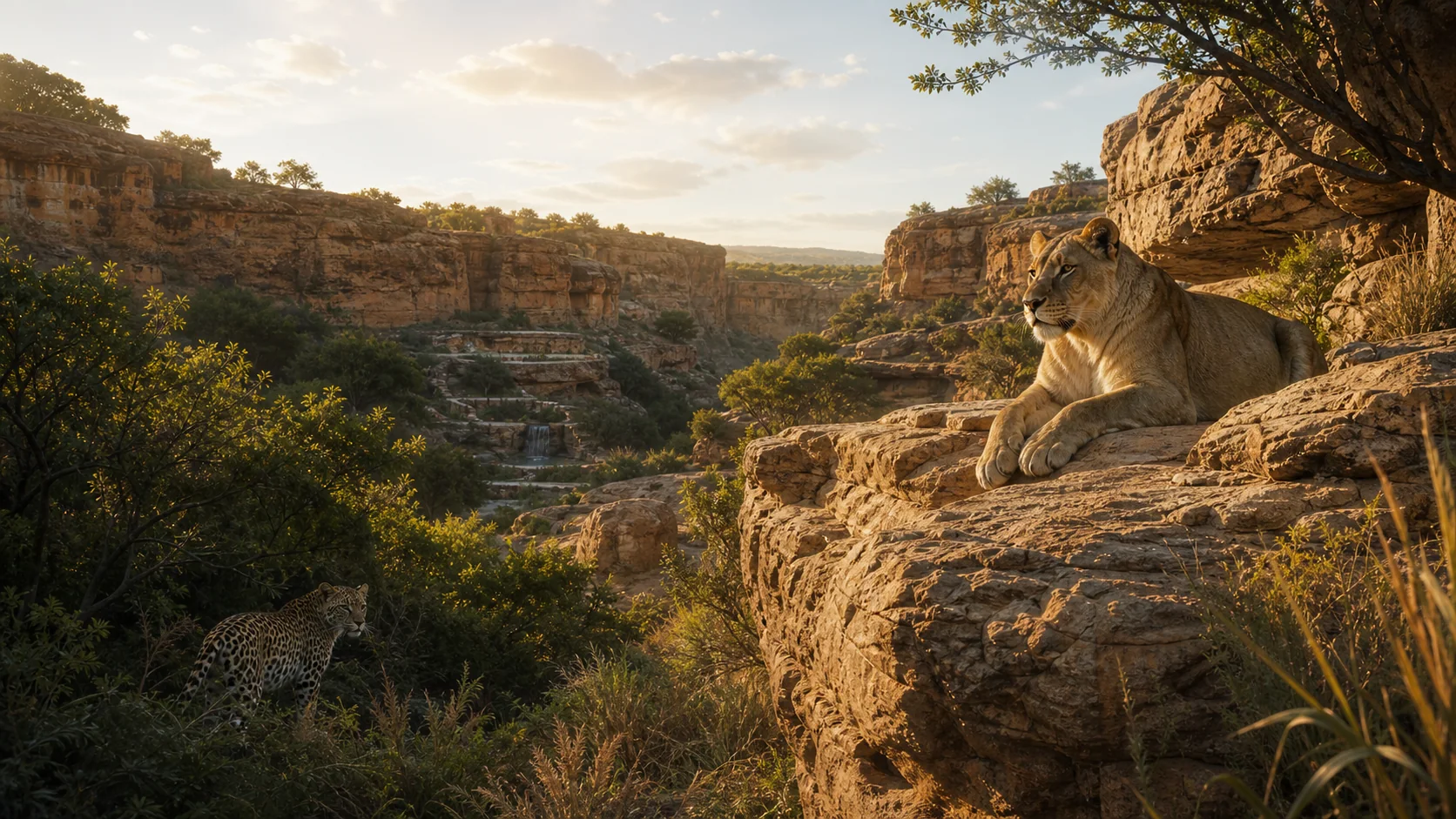
Big Cat Canyon
Powerful predators, dramatic landscapes, unforgettable encounters
Visit Big Cat Canyon