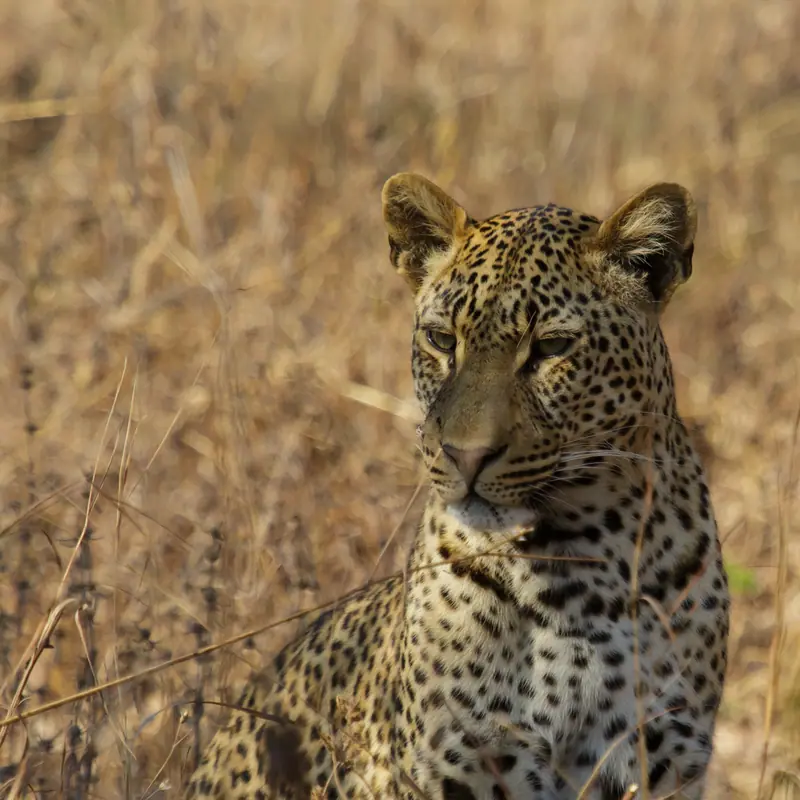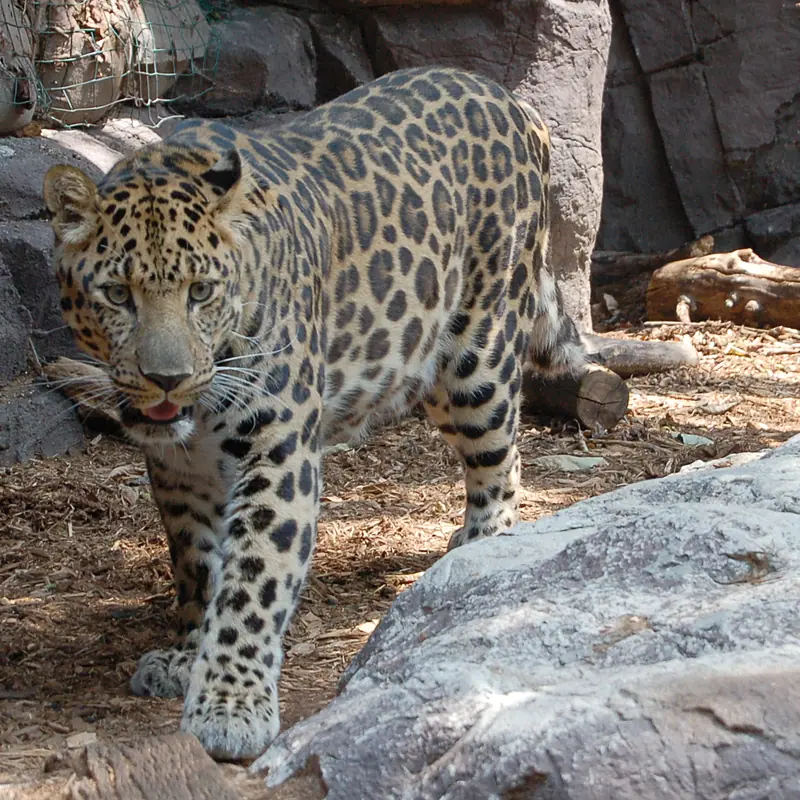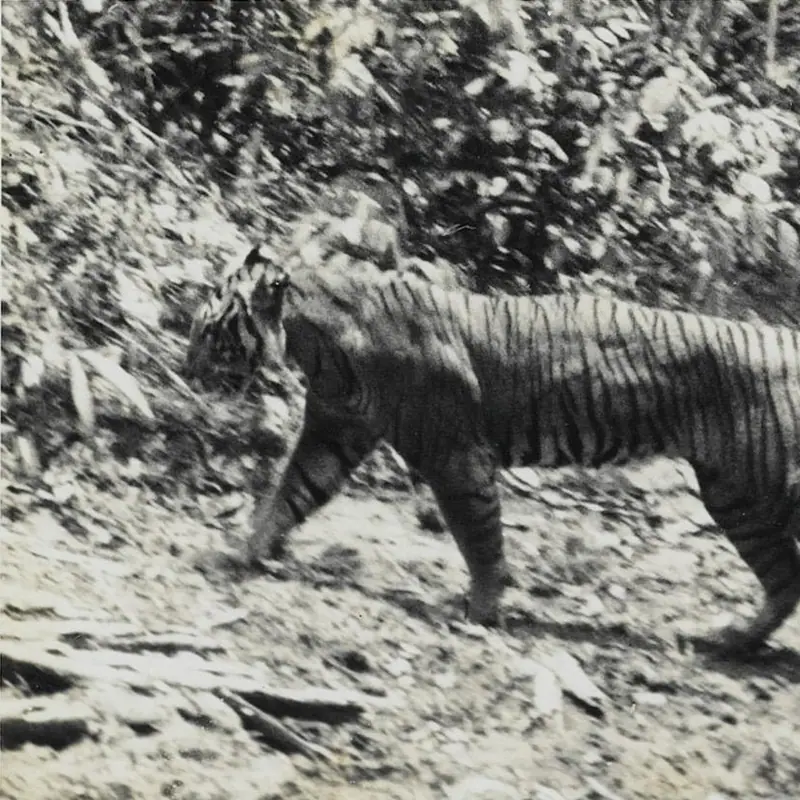

Animal Directory Featured species in the planned Big Cat Canyon habitat
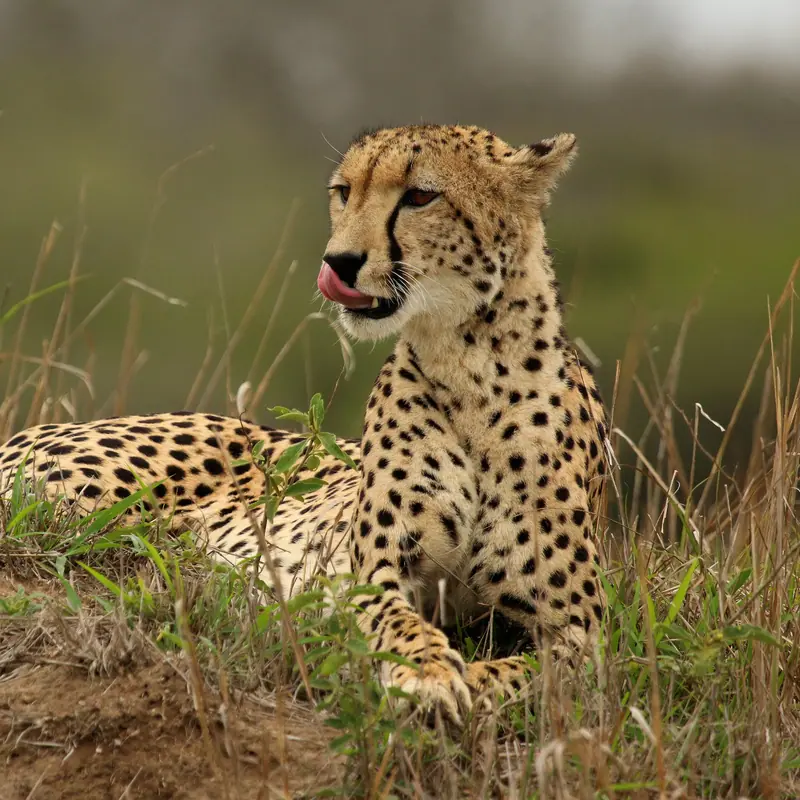
Photo: Charles J. Sharp CC BY-SA 4.0 Wikimedia Commons
Cheetah
Acinonyx jubatus
Young Explorer Notes
Three quick things to know about the Cheetah.
- Superpower
The fastest land animal — capable of 0 to 100 km/h in roughly three seconds and topping out near 110 km/h over a 400-…
- Home
Rocky cliffs and shady trails where big cats prowl.
- How to help
Friends who need our help
Vulnerable means they could disappear if we do not protect their homes.
Fun facts for everyone
- The fastest land animal — capable of 0 to 100 km/h in roughly three seconds and topping out near 110 km/h over a 400-metre sprint.
- Cheetahs are not "true" big cats — they cannot roar; instead they chirp, purr, and yelp, and they retract their claws only partly, keeping a sprinter's grip on the ground.
- The famous black "tear marks" running from each eye down to the mouth are thought to reduce midday glare and help the cat track prey at speed through bright savannah light.
- A single hunt costs an enormous metabolic price — the cheetah's body temperature can rise past 40°C in under a minute, forcing the cat to rest for up to 30 minutes before it can feed.
- The species suffers from severe inbreeding depression; modern populations are descended from a tiny ancestral bottleneck about 10,000 years ago, which is why ex-situ programs are unusually important.
From the master plan
The Cheetah Run on the Big Cat Canyon map is built as a long, narrow grass strip — the only enclosure in the zone designed around horizontal sprint distance rather than vertical complexity. Daily “lure runs” let the cats hit a meaningful fraction of their wild top speed in front of a covered grandstand.
IUCN status sourced from the Cheetah (Acinonyx jubatus) assessment (Durant et al., 2022) on the IUCN Red List — listed as Vulnerable with a continuing population decline.
Find them in
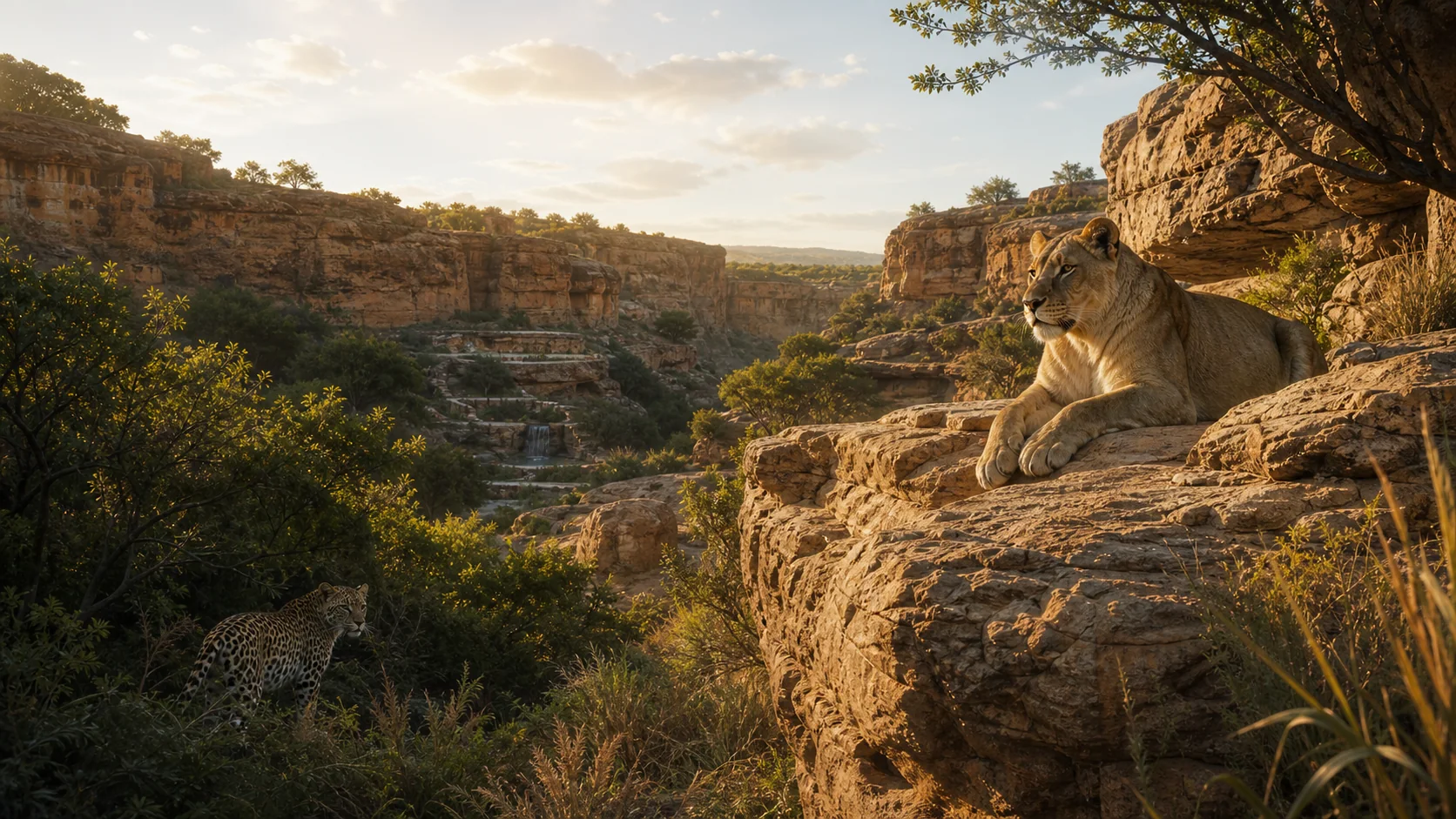
Big Cat Canyon
Powerful predators, dramatic landscapes, unforgettable encounters
Visit Big Cat Canyon