
Animal Directory Featured species in the planned Primate Forest habitat
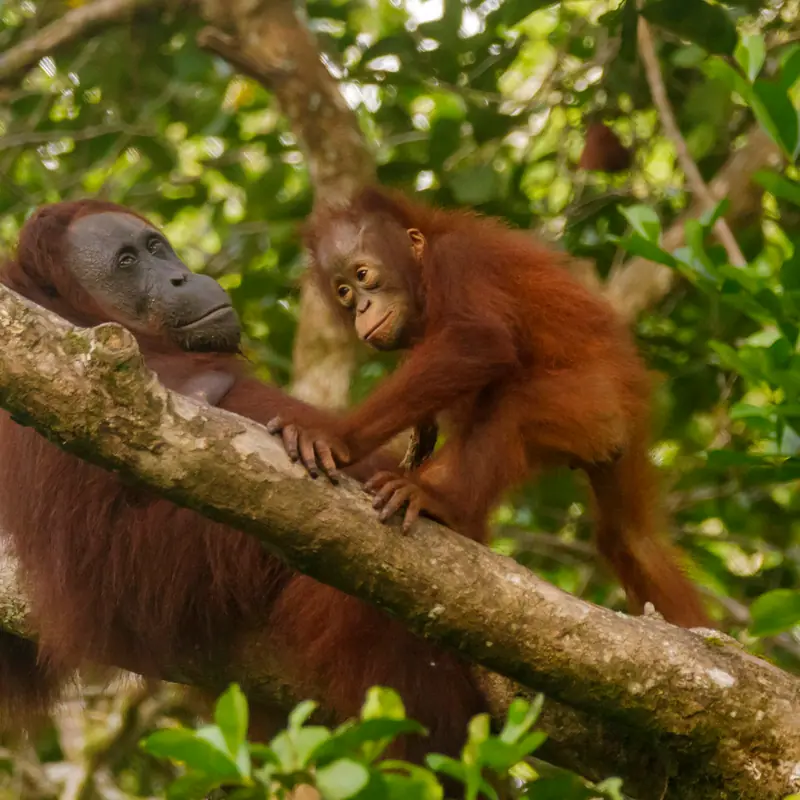
Photo: Thomas Fuhrmann CC BY-SA 4.0 Wikimedia Commons
Bornean Orangutan
Pongo pygmaeus
Young Explorer Notes
Three quick things to know about the Bornean Orangutan.
- Superpower
The largest tree-dwelling mammal on Earth — adult flanged males weigh up to 90 kg, yet spend more than 90% of their l…
- Home
Lush trees and vines where primates swing and play.
- How to help
Critically endangered
Very few are left in the wild. Every rescue and breeding program matters.
Fun facts for everyone
- The largest tree-dwelling mammal on Earth — adult flanged males weigh up to 90 kg, yet spend more than 90% of their lives in the canopy.
- Orangutans build a new sleeping nest from folded branches every evening, often choosing different trees each night and weaving in additional "pillow" twigs.
- Cultural learning is documented across orangutan populations — different rainforests pass down different tool-use techniques (leaf gloves, stick probes, leaf horns) that are not innate.
- Mother-offspring bonds last 7-9 years — the longest dependency of any non-human mammal — which is why captive breeding programs prioritise long-term family-group housing.
- The IUCN reassessed the Bornean Orangutan as Critically Endangered in 2016 after a roughly 50% population decline over 60 years, driven almost entirely by palm-oil and pulp-wood clearance.
From the master plan
Bornean Orangutans range across the high Orangutan Canopy — a tall, multi-strut climbing structure visible from the Treetop Walk that lets guests look orangutans almost in the eye at canopy height, the elevation at which they actually live in the wild.
IUCN status sourced from the Bornean Orangutan (Pongo pygmaeus) assessment (Ancrenaz et al., 2016) on the IUCN Red List — listed as Critically Endangered with a continuing population decline.
Find them in
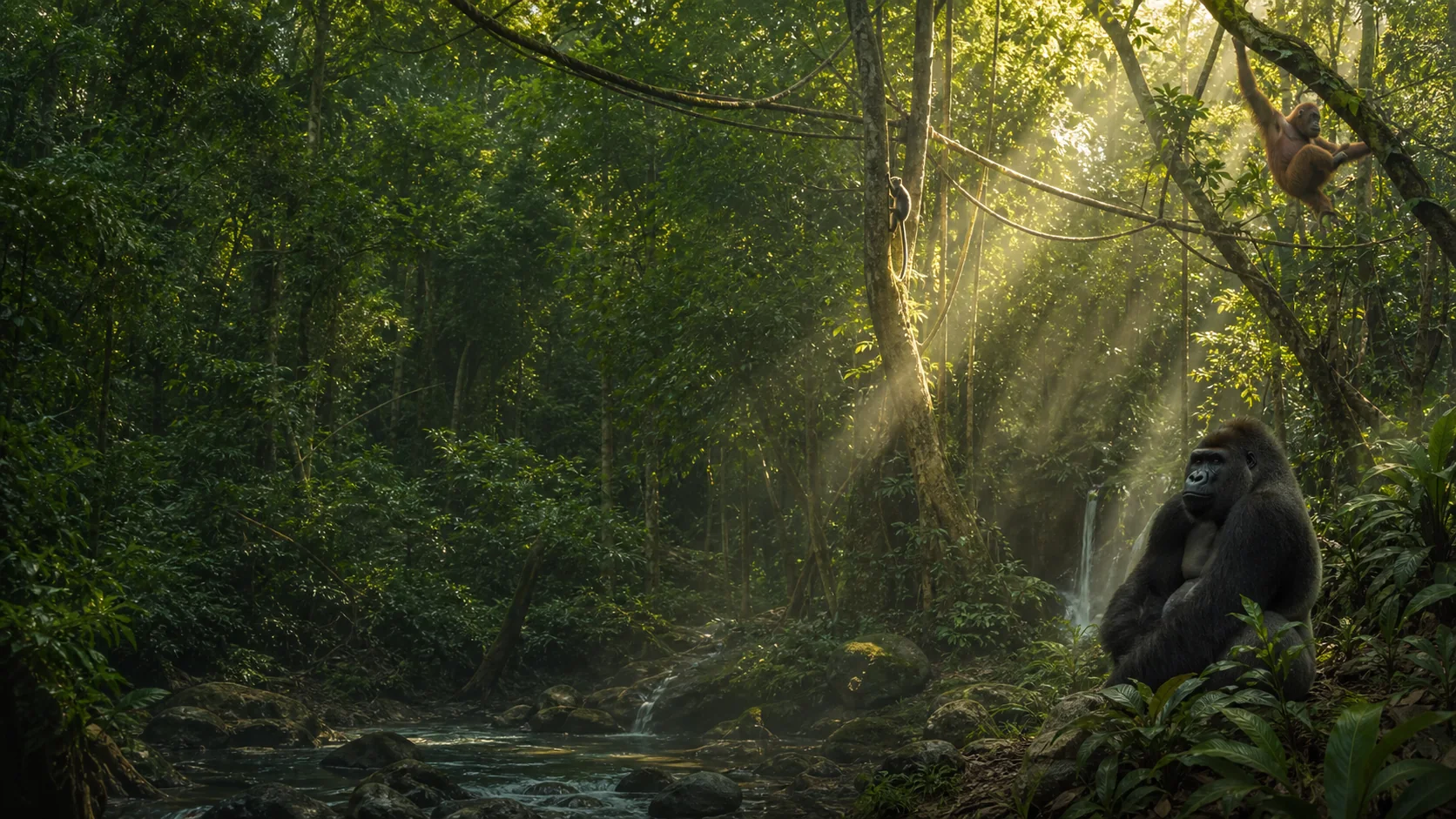
Primate Forest
A lush forest realm where intelligence, connection, and curiosity thrive
Visit Primate Forest