
Animal Directory Featured species in the planned Primate Forest habitat
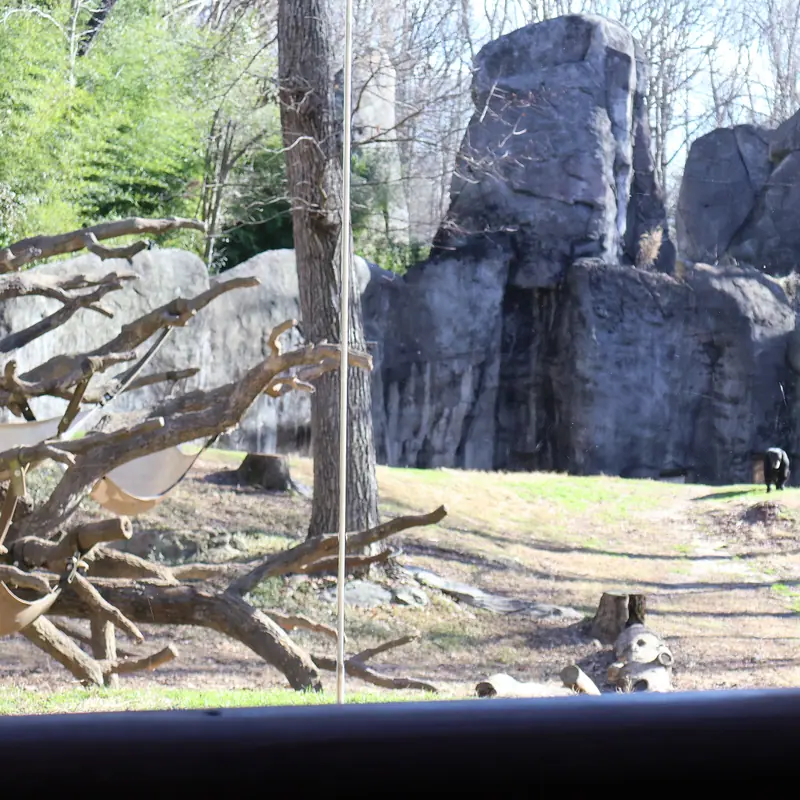
Photo: DiscoA340 CC BY-SA 4.0 Wikimedia Commons
Common Chimpanzee
Pan troglodytes
Young Explorer Notes
Three quick things to know about the Common Chimpanzee.
- Superpower
Chimpanzees share roughly 98.8% of their DNA with humans — our closest living relatives along with bonobos, and the t…
- Home
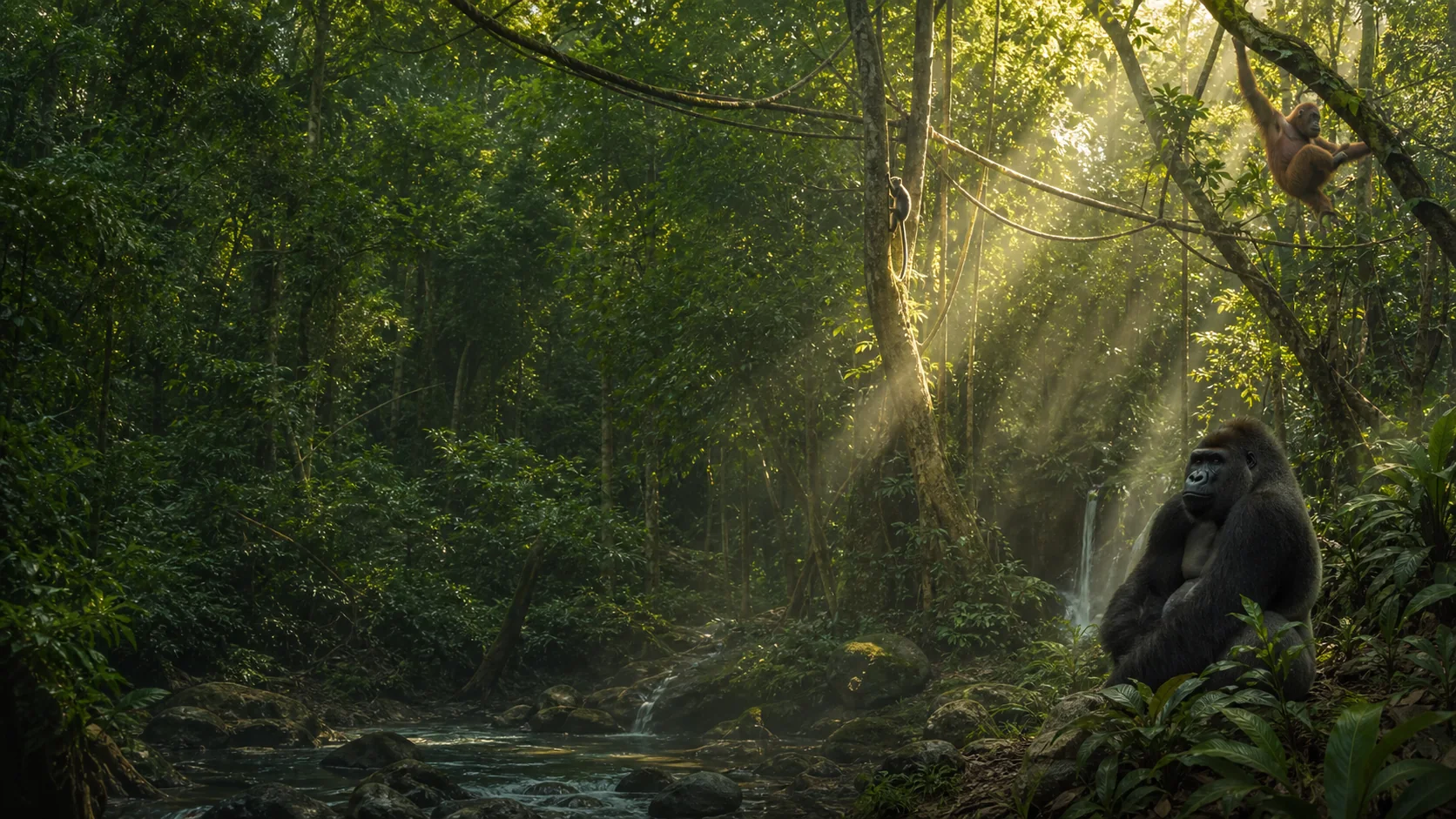
Lush trees and vines where primates swing and play.
- How to help
Endangered — heroes needed!
Zoos and conservation teams work together to save endangered animals and their habitats.
Fun facts for everyone
- Chimpanzees share roughly 98.8% of their DNA with humans — our closest living relatives along with bonobos, and the textbook example of behavioural-cultural variation in wild apes.
- Different chimp populations use different tool kits — termite-fishing twigs in Gombe, nut-cracking stone anvils in the Taï Forest, leaf-sponges for drinking in Mahale, each transmitted by observational learning rather than instinct.
- Wild chimps hunt cooperatively, most often for red colobus monkeys, with documented role differentiation (drivers, blockers, ambushers) similar to lion or wolf hunts.
- They have a complex political life — male coalitions form and dissolve to challenge alpha males, and Jane Goodall's long-running Gombe study has tracked these dynamics across five decades.
- The IUCN lists the species as Endangered with a continuing decline; the four subspecies are unevenly threatened, with the Western chimpanzee already Critically Endangered.
From the master plan
The Chimp Discovery Camp is the most active enclosure in Primate Forest — a complex naturalistic habitat with browse trees, termite-mound feeder analogues, and a research-blind window where guests can watch keeper-led enrichment that mirrors wild tool-use behaviour.
IUCN status sourced from the Chimpanzee (Pan troglodytes) assessment (Humle et al., 2016) on the IUCN Red List — listed as Endangered with a continuing population decline.
Find them in
Primate Forest
A lush forest realm where intelligence, connection, and curiosity thrive
Visit Primate Forest