
Animal Directory Featured species in the planned Australian Outback habitat
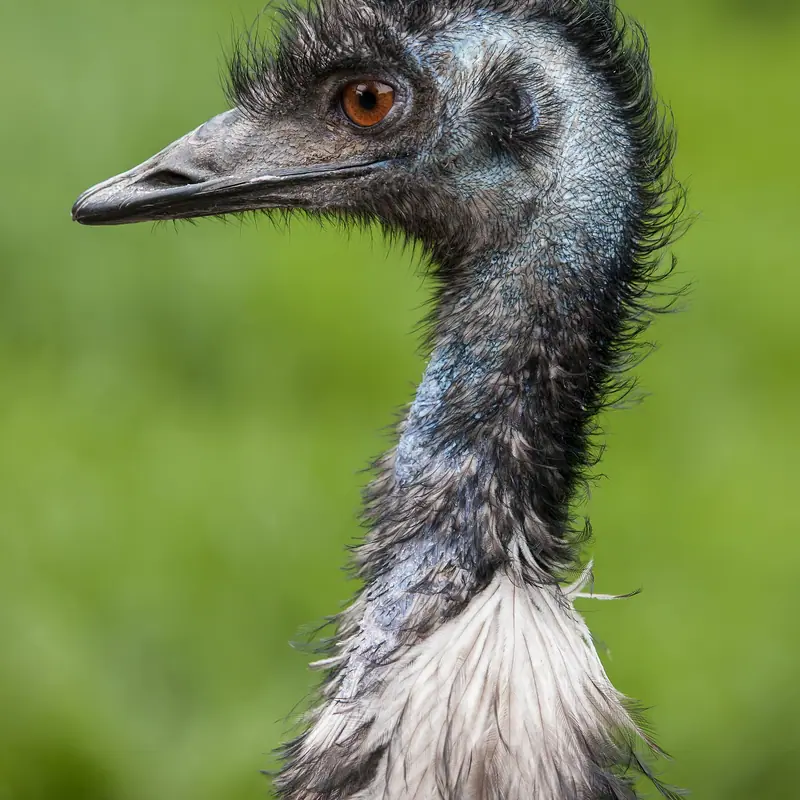
Photo: William Warby CC BY 2.0 Wikimedia Commons
Emu
Dromaius novaehollandiae
Young Explorer Notes
Three quick things to know about the Emu.
- Superpower
The second-tallest living bird after the ostrich, standing up to 1.9 m, and Australia's largest native bird.
- Home
Red earth, open bush, and sunny Australian trails.
- How to help
Doing great in the wild!
Scientists say this species is safe for now. We still learn about them to keep it that way.
Fun facts for everyone
- The second-tallest living bird after the ostrich, standing up to 1.9 m, and Australia's largest native bird.
- Has rudimentary wings with a small claw at the tip and tiny rectrices for tail feathers — but uses powerful three-toed legs to sprint at 50 km/h.
- Males do all the incubation and chick-rearing. Once the female lays her clutch of dark green eggs, the male sits for about 56 days without eating, drinking, or defecating.
- Famous for losing the 1932 "Emu War" in Western Australia, where army units with machine guns were sent after a flock destroying crops — and were outmanoeuvred.
- IUCN listed as **Least Concern** with a large, stable population spread across most of mainland Australia.
From the master plan
The Emu shares the Emu Plains mixed-species walkthrough with red-necked wallabies, a layout that mirrors how the species naturally co-exist on Australian rangeland. Guests cross the paddock on a low boardwalk so the birds control the encounter, approaching only when curious.
IUCN status sourced from the Emu assessment (BirdLife International, 2018) on the IUCN Red List —
Dromaius novaehollandiaelisted as Least Concern.
Find them in