
Animal Directory Featured species in the planned Australian Outback habitat
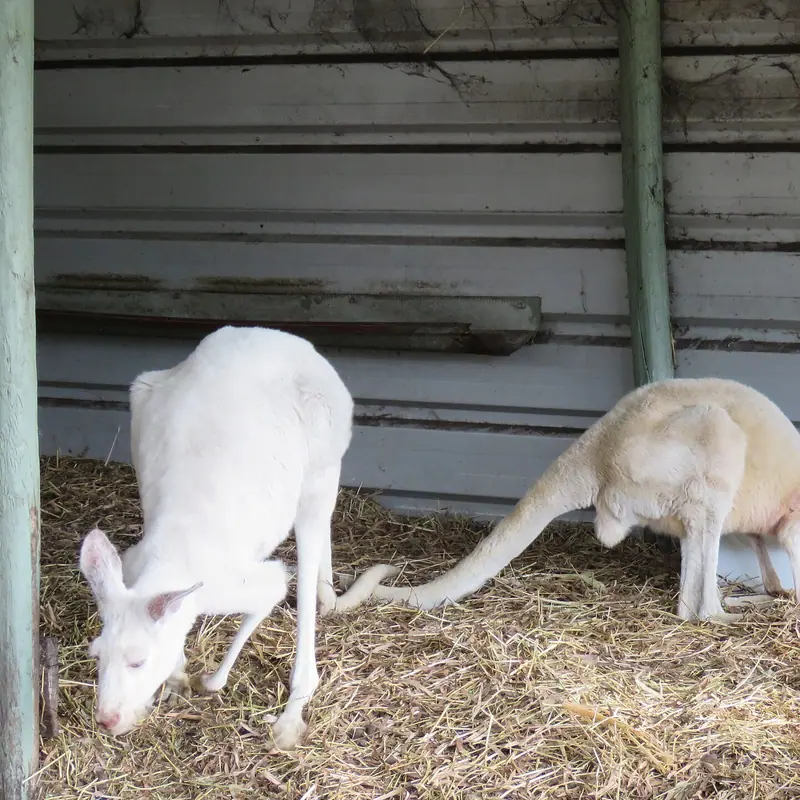
Photo: Calistemon CC BY-SA 4.0 Wikimedia Commons
Red Kangaroo
Osphranter rufus
Young Explorer Notes
Three quick things to know about the Red Kangaroo.
- Superpower
The largest living marsupial — adult males can reach 1.8 m standing and weigh up to 90 kg, with a tail almost a metre…
- Home
Red earth, open bush, and sunny Australian trails.
- How to help
Doing great in the wild!
Scientists say this species is safe for now. We still learn about them to keep it that way.
Fun facts for everyone
- The largest living marsupial — adult males can reach 1.8 m standing and weigh up to 90 kg, with a tail almost a metre long for balance and pushing off.
- Hops, not runs. Above 20 km/h, hopping is more energy-efficient than four-legged running for a kangaroo's body plan; cruising speed is ~25 km/h with bursts to 70 km/h.
- Has the unique ability to **pause a pregnancy** (embryonic diapause) — useful when the outback dries up and conditions for a joey are poor.
- Newborn joeys are the size of a jellybean (about 2 g) at birth and climb unassisted through their mother's fur to the pouch.
- IUCN listed as **Least Concern**; populations swing dramatically with rainfall but remain widespread across arid and semi-arid Australia.
From the master plan
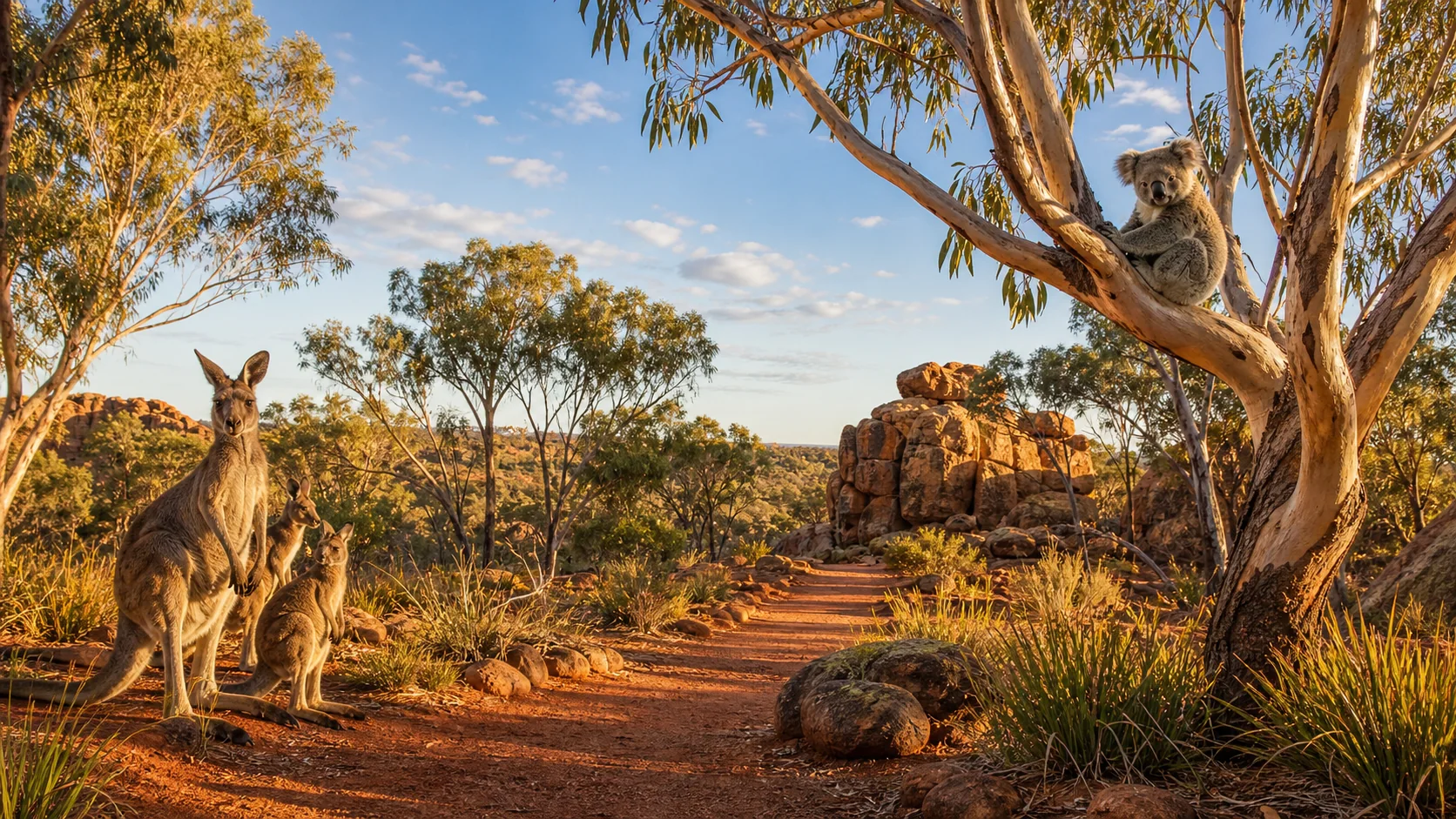
The Red Kangaroo headlines the Kangaroo Walkabout at the eastern end of Australian Outback. The open red-earth paddock is sized to give a mob room to graze, lounge, and box during the cool hours — the experience guests come for is walking quietly within a working kangaroo social group.
IUCN status sourced from the Red Kangaroo (Ellis et al., 2016) on the IUCN Red List —
Osphranter rufuslisted as Least Concern with a stable population.
Find them in