
Animal Directory Featured species in the planned Asian Highlands habitat
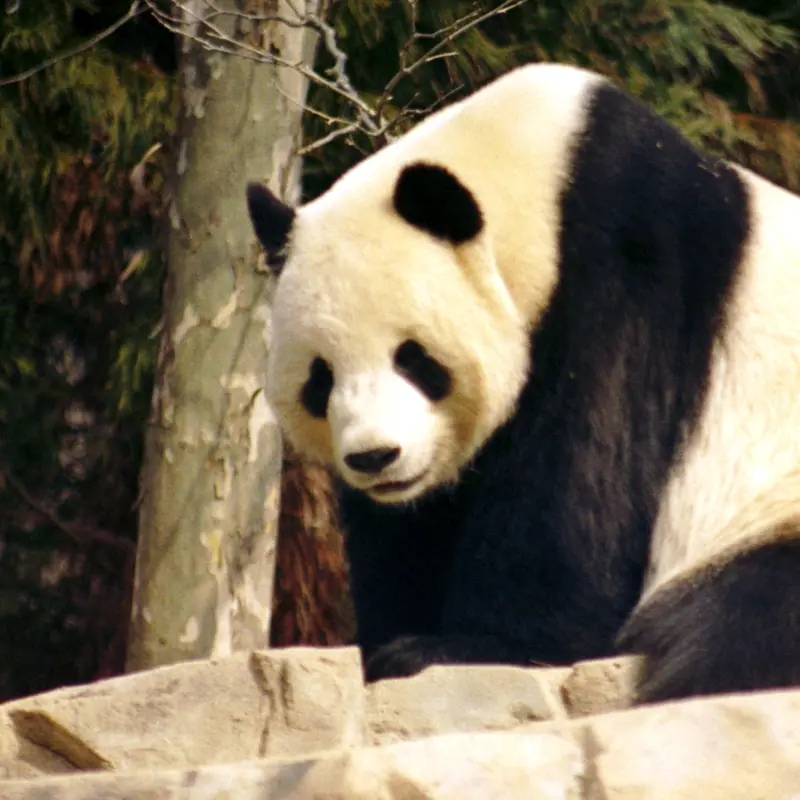
Photo: Jeff Kubina Public domain Wikimedia Commons
Giant Panda
Ailuropoda melanoleuca
Young Explorer Notes
Three quick things to know about the Giant Panda.
- Superpower
Spends roughly 12 hours a day eating bamboo, working through 12-38 kg of shoots, stems, and leaves to extract enough …
- Home
Mountain paths, mist, and highland meadows.
- How to help
Friends who need our help
Vulnerable means they could disappear if we do not protect their homes.
Fun facts for everyone
- Spends roughly 12 hours a day eating bamboo, working through 12-38 kg of shoots, stems, and leaves to extract enough nutrition from a low-energy diet.
- The "thumb" on each forepaw is not a finger but a modified wrist bone — a sesamoid that evolved into a sixth digit for gripping bamboo.
- Although classified as a carnivore, more than 99% of its diet is plant matter; it retains the short digestive tract of its meat-eating ancestors.
- Cubs are born blind, almost hairless, and only about 1/900th the size of their mother — one of the most extreme size differences between newborn and parent in any placental mammal.
- Reassessed from Endangered to **Vulnerable** by IUCN in 2016 after decades of habitat protection lifted the wild population above 1,800 individuals.
From the master plan
The Giant Panda is the headline species of Asian Highlands. The zone’s bamboo viewing garden and panda overlook are designed around the animal’s slow, deliberate browsing rhythm — guests linger long enough to watch a panda strip a single bamboo stem from base to tip.
IUCN status sourced from the Giant Panda assessment (Swaisgood, Wang & Wei, 2016) on the IUCN Red List —
Ailuropoda melanoleucawas downlisted from Endangered to Vulnerable in 2016, a rare conservation success story.
Find them in