
Animal Directory Featured species in the planned Asian Highlands habitat
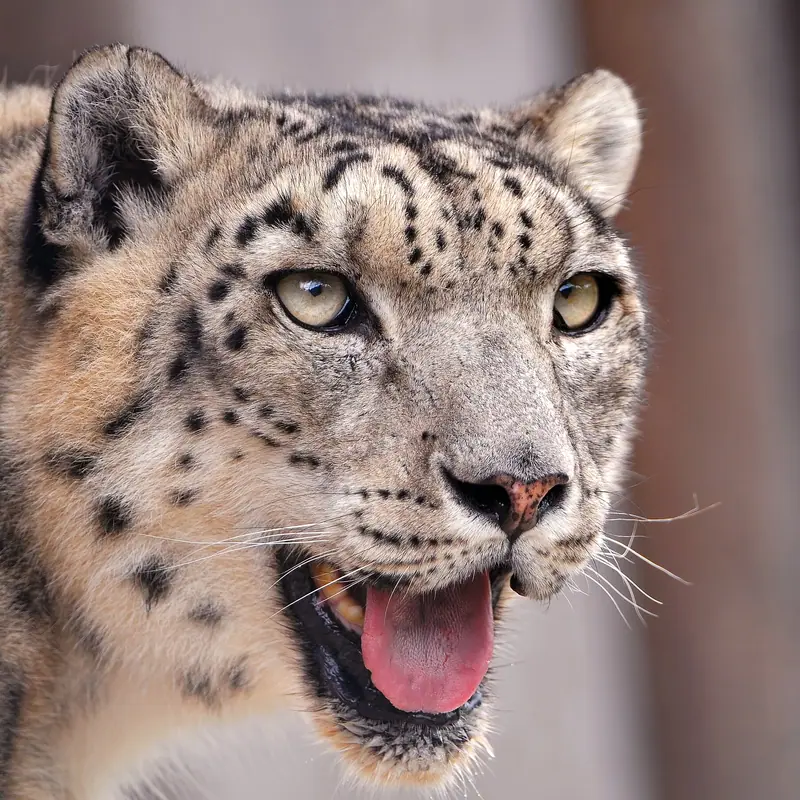
Photo: Tambako The Jaguar CC BY-SA 2.0 Wikimedia Commons
Snow Leopard
Panthera uncia
Young Explorer Notes
Three quick things to know about the Snow Leopard.
- Superpower
The tail is nearly a metre long — roughly equal to the body length — and serves as both balance pole on cliff ledges …
- Home
Mountain paths, mist, and highland meadows.
- How to help
Friends who need our help
Vulnerable means they could disappear if we do not protect their homes.
Fun facts for everyone
- The tail is nearly a metre long — roughly equal to the body length — and serves as both balance pole on cliff ledges and a fur wrap pulled over the muzzle while resting in the snow.
- One of the few big cats that cannot roar; the larynx lacks the specialised structure of lions and tigers, so snow leopards chuff, mew, and hiss instead.
- Can leap up to 15 metres (50 ft) in a single bound — the longest jump of any cat — to clear ravines on the rocky alpine slopes it patrols.
- Lives at 3,000-5,500 m elevation in the wild, with oversized nasal cavities that warm the thin mountain air before it reaches the lungs.
- IUCN reassessed the species from Endangered to **Vulnerable** in 2017; the wild population is estimated at around 4,000 mature individuals across 12 range countries.
From the master plan
The Snow Leopard occupies the Snow Leopard Ridge at the highest point of Asian Highlands. The exhibit is built into a constructed rock face with cool microclimate jets and deep ledge dens, letting the cats stage themselves the way they would on a Hindu Kush escarpment — visible only when they choose to be.
IUCN status sourced from the Snow Leopard assessment (McCarthy et al., 2017) on the IUCN Red List —
Panthera unciawas downlisted from Endangered to Vulnerable in 2017 following improved population data.
Find them in