
Animal Directory Featured species in the planned Butterfly Garden habitat
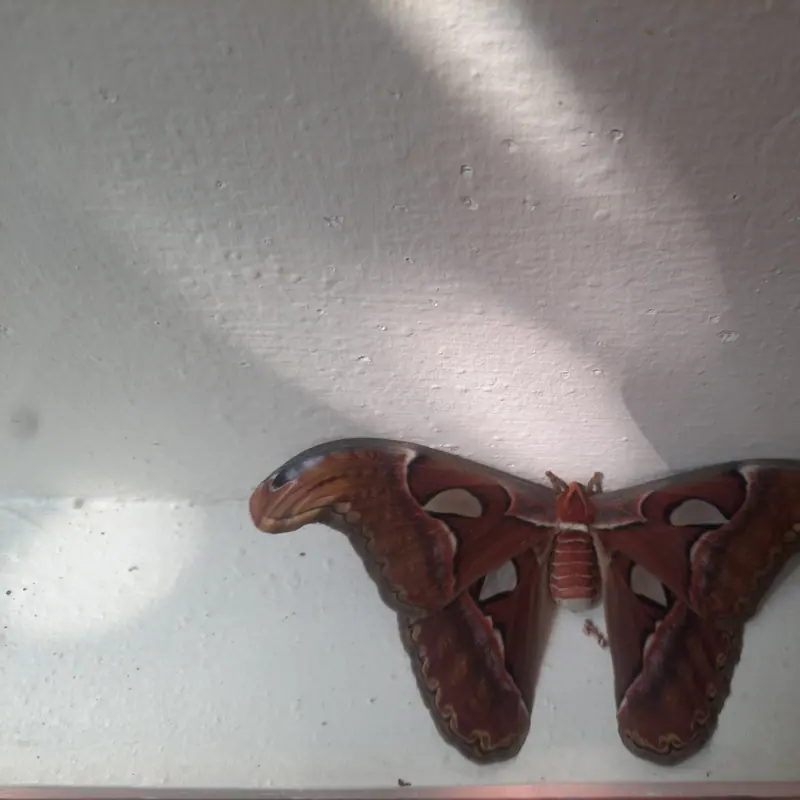
Photo: Raghith CC0 Wikimedia Commons
Atlas Moth
Attacus atlas
Young Explorer Notes
Three quick things to know about the Atlas Moth.
- Superpower
One of the largest moths on Earth by wing surface area — wingspans reach 24 cm, with female bodies thicker than a hum…
- Home
A rainbow of flowers where butterflies dance.
- How to help
Doing great in the wild!
Scientists say this species is safe for now. We still learn about them to keep it that way.
Fun facts for everyone
- One of the largest moths on Earth by wing surface area — wingspans reach 24 cm, with female bodies thicker than a human thumb.
- Adults have no functional mouthparts and never feed; they live one to two weeks on energy stored as caterpillars and exist only to mate.
- Wing tips mimic the head of a cobra, complete with a curved "snout" pattern, which startles birds and lizards into backing off.
- Females release a pheromone plume that males detect with their massive feathered antennae from several kilometres downwind.
- Native silk producers in India and parts of Southeast Asia have long harvested empty Atlas-moth cocoons for "fagara" silk — a tan, looser-spun fibre than the mulberry silkworm's.
From the master plan
The Atlas Moth is the dusk piece of the Butterfly Garden — the species displayed in the chrysalis emergence cabinet near the garden gate, where guests can see the adult unfold for the first time. Its scale alone — a hand-sized moth — does most of the storytelling.
No global IUCN Red List assessment exists for Attacus atlas. It is widely considered secure across its Indo-Malayan range and farmed commercially for silk; we record it as LC by convention.
Find them in
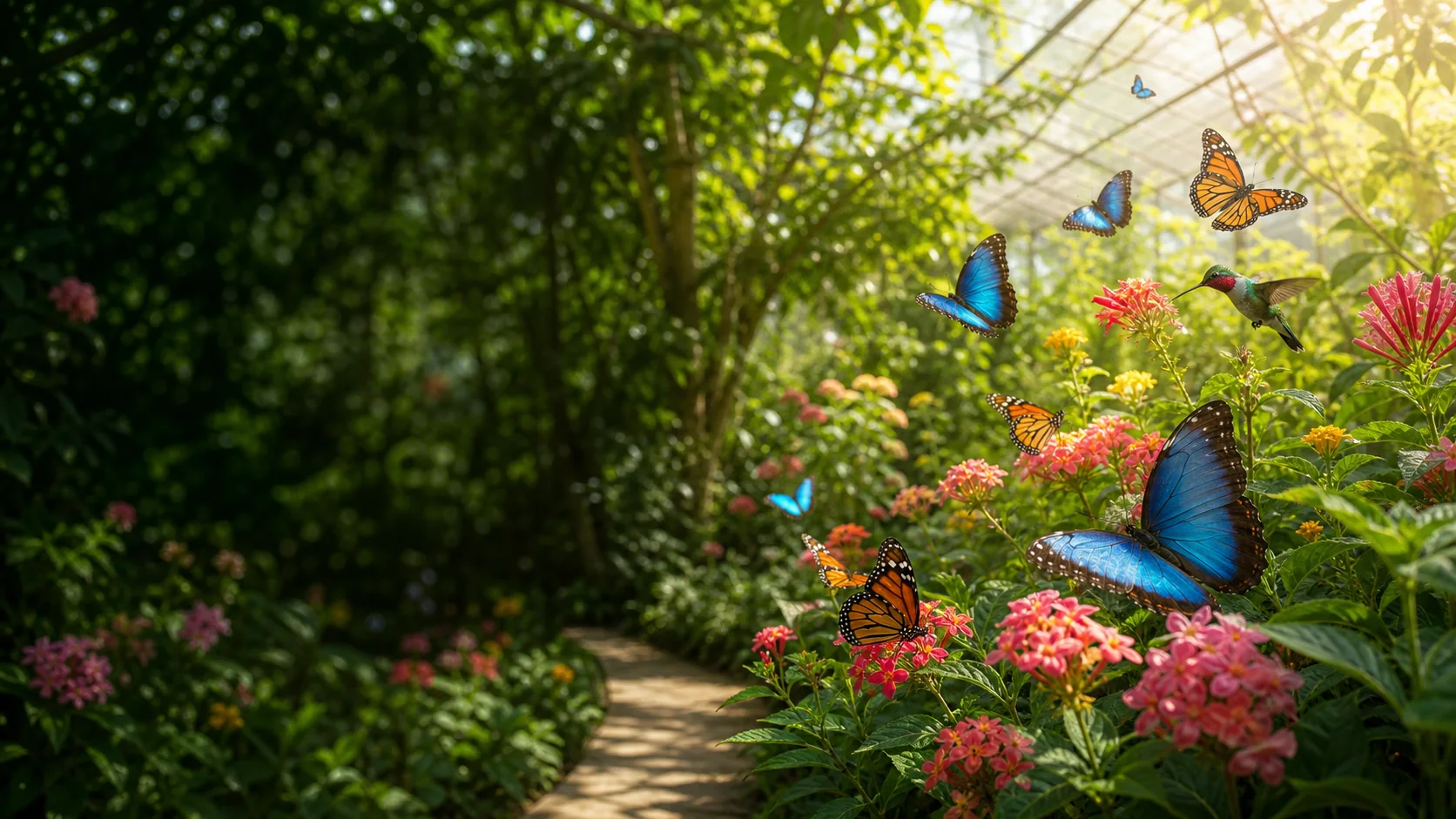
Butterfly Garden
A delicate, colorful sanctuary for pollinators, flowers, and gentle discovery
Visit Butterfly Garden