
Animal Directory Featured species in the planned Reptile & Nocturnal House habitat
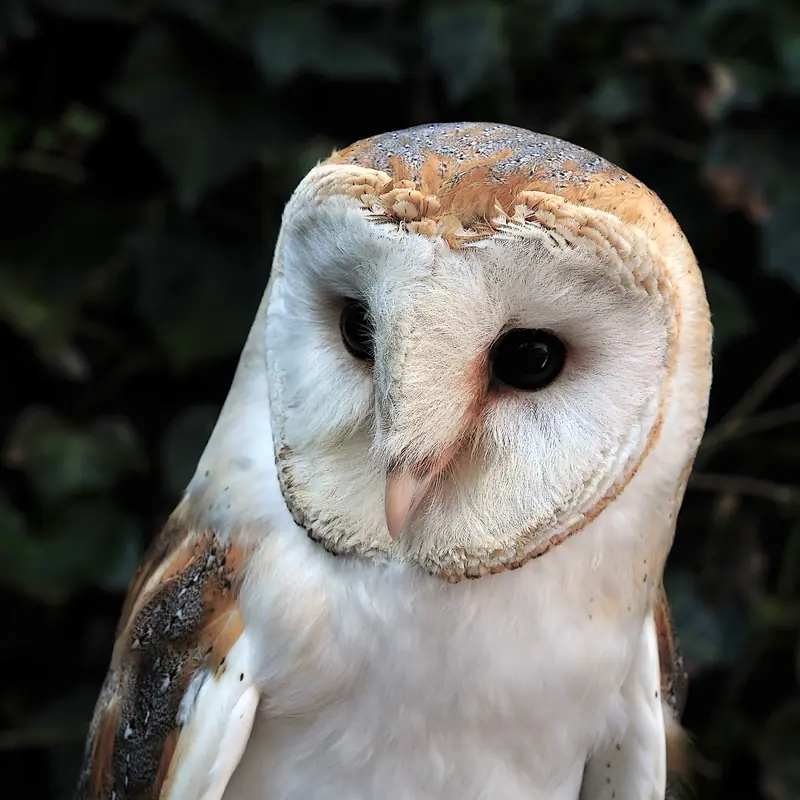
Photo: Michael Gäbler CC BY 3.0 Wikimedia Commons
Barn Owl
Tyto alba
Young Explorer Notes
Three quick things to know about the Barn Owl.
- Superpower
Heart-shaped facial disc acts as a parabolic dish, funnelling the faintest scratch of a mouse on a wooden beam direct…
- Home
A cool, moonlit world for reptiles and night hunters.
- How to help
Doing great in the wild!
Scientists say this species is safe for now. We still learn about them to keep it that way.
Fun facts for everyone
- Heart-shaped facial disc acts as a parabolic dish, funnelling the faintest scratch of a mouse on a wooden beam directly to the owl's ears.
- Asymmetric ear placement — one ear higher than the other — lets it pinpoint prey in pitch darkness from sound alone.
- The leading edges of its primary feathers carry tiny comb-like serrations that break the airflow, making the wingbeat silent to mice.
- Found on every continent except Antarctica — one of the most widely distributed land bird species on Earth.
- IUCN lists the species as Least Concern with a global population estimated in the millions.
From the master plan
The Barn Owl is the planned Reptile & Nocturnal House’s Owl Outlook resident — a quiet rock alcove where guests watch the owl roost during the day and lift off in absolute silence under the exhibit’s twilight cycle.
IUCN status sourced from the Barn Owl (Tyto alba) assessment (BirdLife International, 2019) on the IUCN Red List — listed as Least Concern with a stable, near-global distribution.
Find them in

Reptile & Nocturnal House
A mysterious indoor world of scales, stealth and after-dark discovery
Visit Reptile & Nocturnal House